Sequencing the Sagami: How Open-Door Genomics Turned a River Into a Research Partner
Photo: United States Navy, Public domain, via Wikimedia Commons
On a Saturday morning last October, a retired high school biology teacher from Isehara knelt on the bank of the Sagami River with a sterile bottle in hand. Three hours later, her sample — along with dozens collected by students, farmers, and local anglers — was processing through a sequencer on the third floor of the Atsugi Life Sciences Building.
This is an ordinary weekend at the Atsugi Genome Commons, the university's open-access genomics facility and the centerpiece of one of the most ambitious citizen science programs in the region.
A Lab Without a Locked Door
Most university sequencing facilities operate behind credential walls: faculty proposals, grant approvals, waitlists. The Genome Commons inverted that model when it opened in 2022. Its environmental DNA (eDNA) program accepts samples from any community member willing to follow a simple collection protocol.
The premise is straightforward. Every organism leaves genetic traces in water — sloughed skin cells, waste, mucus. By sequencing that genetic residue, researchers can inventory an ecosystem without ever catching a fish or spotting an amphibian. What the Commons added was scale: hundreds of volunteer collectors generating a longitudinal map of riverine biodiversity that no single lab could produce alone.
"A graduate student can sample twenty sites in a season," says Dr. Keiko Muraoka, the facility's director. "Our community network samples twenty sites in a weekend. That changes what questions we're allowed to ask."
What the Water Is Telling Us
The results have been consequential. Over eighteen months, volunteer-collected samples documented the upstream migration of an invasive crayfish species weeks before conventional trap surveys detected it. They also revealed unexpected overwintering habitat for a native loach species thought to be in local decline — a finding now driving a habitat restoration partnership with municipal authorities.
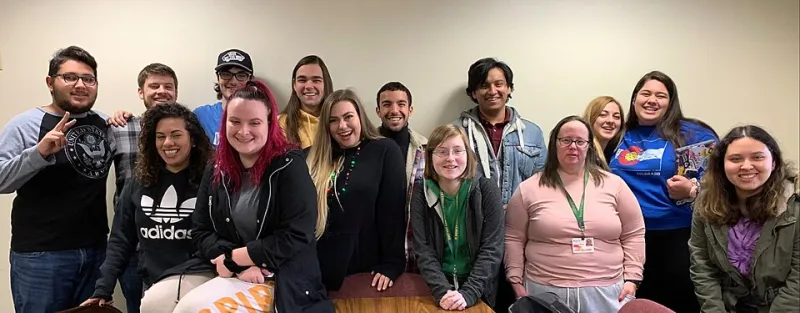
For undergraduates, the Commons has become a rare bridge between coursework and genuine discovery. Students in the Department of Bioscience and Biotechnology design primer panels, troubleshoot contamination issues, and co-author papers analyzing volunteer datasets. Several have presented at national conferences — an outcome the program treats not as exceptional but as the expected product of working with real data at real scale.
The Questions That Come With Openness
Radical accessibility generates friction, and the Commons has not pretended otherwise.
The first challenge is bioethics. Sequencing river water inevitably sweeps up human genetic material — trace amounts shed from swimmers, anglers, and riverside residents. The facility's biosecurity board established strict protocols excluding any human-informatic sequences from analysis, but the episode prompted campus-wide seminars on the boundaries of environmental surveillance.
The second is data governance. Volunteer-collected samples carry location metadata. If a rare species is discovered at a precise coordinate, should that information be public when poachers use the same databases? The Commons adopted a tiered release system, publishing species presence while redacting fine-grained locations for vulnerable taxa.
The third question is philosophical: who owns a discovery made with community labor? The Commons adopted an open-data pledge — all biodiversity findings are released to public repositories, unencumbered — and credits volunteer collectors in publications. It is a small policy with an outsized signal about whom science belongs to.
A Model Under Observation
Peer institutions have taken notice. Delegations from universities in the United States and Southeast Asia have toured the facility, studying whether the model can survive transplantation to watersheds with different legal frameworks around genetic data.
Dr. Muraoka is measured about the export prospects. "The protocol is portable. The trust is not," she says. "Trust has to be built sample by sample, person by person."
For the undergraduates who staff the lab's public-facing bench on weekday afternoons — explaining electropherograms to curious visitors — the lesson is absorbed early. Science, in this building, is not something done to a community. It is something done with one, one river sample at a time.