When the Algorithm Reads Your Lab Report: A Pilot Program Divides a Campus
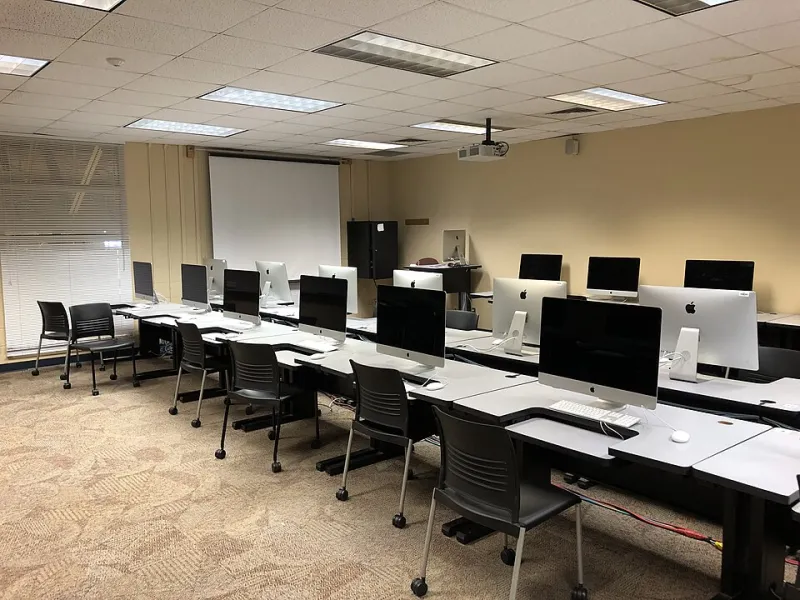
Photo: Mbrickn, CC BY-SA 4.0, via Wikimedia Commons
In the basement teaching lab of Atsugi's Engineering Building 3, something unusual happens after students in Dr. Kenji Morita's sophomore computer science course submit their weekly lab reports. Before Morita reads a single word, a large language model — fine-tuned on three years of his own graded feedback — produces a draft evaluation for every submission.
Morita then reviews, edits, and signs off on each one. But the drafts are there, and students know it. Whether they mind is another question entirely.
The Mechanics of the Experiment
The pilot, now in its third semester, began with a practical problem. Morita teaches roughly 140 students across two sections, and the written lab reports — dense with pseudocode, debugging logs, and error analysis — consumed the better part of his weekends. His solution was to train a model on his own annotated feedback from previous years, then use it to generate first-pass comments.
"The machine is very good at catching what is missing," Morita explained in a faculty seminar last month. "It notices when a student skipped the complexity analysis or misunderstood the error condition. It is much worse at understanding why a student made a particular mistake. That part remains mine."
The program's transparency is deliberate. Morita publishes a semester-end report showing agreement rates between the AI's draft scores and his final grades. The current figure hovers around 78 percent for numeric scores, and considerably lower — he admits — for the quality of written commentary.
The Pushback
Not everyone is comfortable. A petition circulated last fall by the student chapter of the computing society asked for an explicit opt-out from AI-assisted feedback, citing concerns about surveillance and the commodification of student work. The petition gathered just over 200 signatures.
The students' objections cluster around three arguments. First, that their writing is being used, however indirectly, to improve a commercial model. Second, that edited AI feedback creates a false impression of human attention. Third — and most interestingly — that being graded by a machine changes how students write, pushing them toward formulaic reports optimized for algorithmic approval.
That last concern echoes debates already roiling American higher education, where institutions from community colleges to the Ivy League are wrestling with generative AI in assessment. The difference is that most US institutions have adopted wait-and-see policies, while Morita's lab is generating data.
What the Numbers Actually Say
The pilot's most rigorous finding so far is also its most humbling. When the AI's feedback was compared against a human second-grader in a blind study of 60 reports, the human-human agreement exceeded the human-AI agreement by a wide margin, particularly on open-ended design questions. On mechanical criteria — correct outputs, proper documentation, boundary cases — the gap nearly vanished.
In other words, the algorithm grades what can be graded. What it cannot yet do is the interpretive work that distinguishes a good teacher from a good rubric.
Morita's response to critics has been consistent: the alternative is not pristine human attention, but exhausted human attention. "A professor who grades 140 reports at midnight is not more accurate than the model," he says. "He is only more tired."
Could This Work in an American Classroom?
For US universities watching from a distance, the Atsugi pilot offers a template — and a caution. The template: narrow scope, published accuracy data, human sign-off on every grade, and a formal channel for student objection. The caution: even with those guardrails, trust is the binding constraint. Students here accepted the system only after Morita agreed to annual town-hall reviews and a written commitment that their submissions would never train external models.
American institutions, bound by FERPA and increasingly by state-level AI disclosure laws, would face a steeper regulatory climb. Several US systems, including the California State University campuses, have already issued guidance requiring disclosure when AI touches graded work.
The deeper question is philosophical rather than technical. If a model drafts feedback that a professor reads, corrects, and endorses, who is the teacher? Atsugi's answer, for now, is that authorship follows accountability — the human who signs the evaluation owns it. Whether American students and faculties will accept that answer remains the most important open question this experiment has produced.