Staying Past the Finish Line: The Quiet Case of Atsugi's Perpetual Student
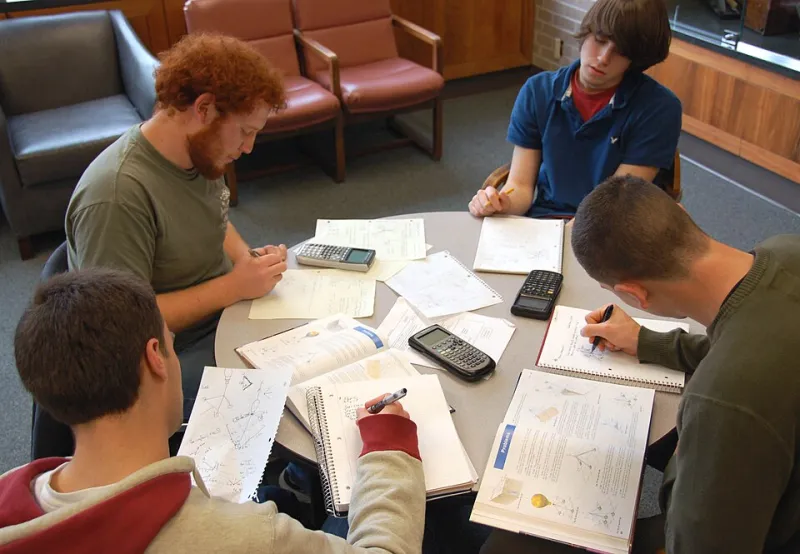
Photo: Tulane Public Relations, CC BY 2.0, via Wikimedia Commons
Every registrar's office has a folder it never expected to keep. At the University of Atsugi, that folder belongs to a student we will call M., a fifth-year environmental science major who, by any conventional measure, finished her degree last spring. She has the completed credit audit. She has the faculty signatures. She has declined, in writing, three commencement notices.
Instead, each semester, she registers for another course she does not need. This fall it was a graduate seminar in hydrological modeling. Next spring, she says, it will likely be a studio course in scientific illustration. Neither appears on any degree requirement she intends to fulfill.
The Super-Senior, Reconsidered
M. is not alone, and Atsugi is not an outlier. Registrars across the United States have reported a slow but steady rise in what some offices informally call "voluntary super-seniors"—students who have met all graduation requirements and choose to keep enrolling. The phenomenon sits awkwardly in a system built around throughput. Federal financial aid has time limits. Tuition bills do not pause for deliberation. Institutional metrics, from completion rates to cohort tracking, treat extended enrollment as a problem to be solved rather than a choice to be understood.
Yet the reasons students give for staying rarely sound like failure. In M.'s case, and in interviews with several peers in similar positions, the explanations cluster around a common theme: the degree is finished, but the education is not. One student described the final year as "the first time I could take a course purely because I was curious." Another said she had only just discovered the question she wanted to spend a career on, and leaving felt like abandoning it at the threshold.
A Design Flaw or a Design Insight?
The opinion at Atsugi's faculty senate, where the topic surfaced last semester, splits along predictable lines. Critics of perpetual enrollment point to the costs—both to the student, who accumulates debt for credits that confer no credential, and to the institution, whose seats and faculty attention are finite. A fifth year of tuition, one economics colleague noted bluntly, is a very expensive way to defer a job search.
Defenders counter that the phenomenon exposes something wrong with the degree itself. If a student's most intellectually alive years are the ones after the requirements end, perhaps the requirements are crowding out exactly the exploration universities claim to foster. The final semester, stripped of obligation, may be the only time a curriculum truly functions as advertised.
There is a middle reading, and it is the one this publication finds most persuasive. Perpetual enrollment is neither pathology nor paradise. It is a symptom of a system that treats education as a bounded product with a delivery date, at a moment when careers increasingly demand unbounded learning. The student who refuses to graduate is, in a sense, proto-typing the lifelong learner that every strategic plan claims to serve—the difference is that she is doing it inside the building, paying full price, with no certificate at the end.
What Institutions Owe the Student Who Stays
If universities take these students seriously, several practical questions follow. Should there be a formal status—a non-degree continuation track—with reduced tuition, advising, and honest framing, rather than the current arrangement in which students quietly overstay? Should capstone and thesis structures be redesigned so that the culminating experience arrives when a student is ready, not when a credit count says so? And should advisors be trained to distinguish between a student avoiding departure and a student genuinely mid-formation?
M., for her part, plans to graduate in the spring. She says the extra year gave her a research direction, two mentors, and the conviction that she wants to teach. She also acknowledges the cost and does not recommend her path to everyone.
The registrar, meanwhile, keeps the folder. Perhaps the most useful thing the rest of higher education can do is stop treating it as an anomaly and start treating it as data.