The Question Behind the Question: How Atsugi Certifies Professors for the Art of Being Challenged
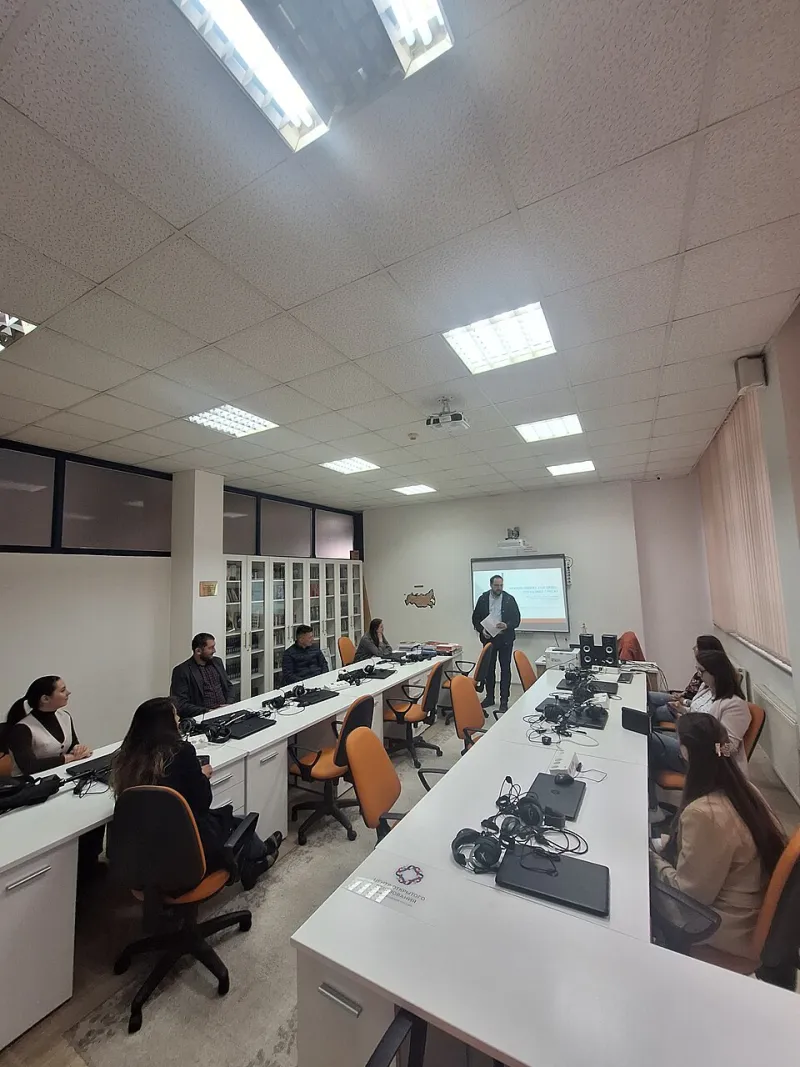
Photo: StefanRa95, CC0, via Wikimedia Commons
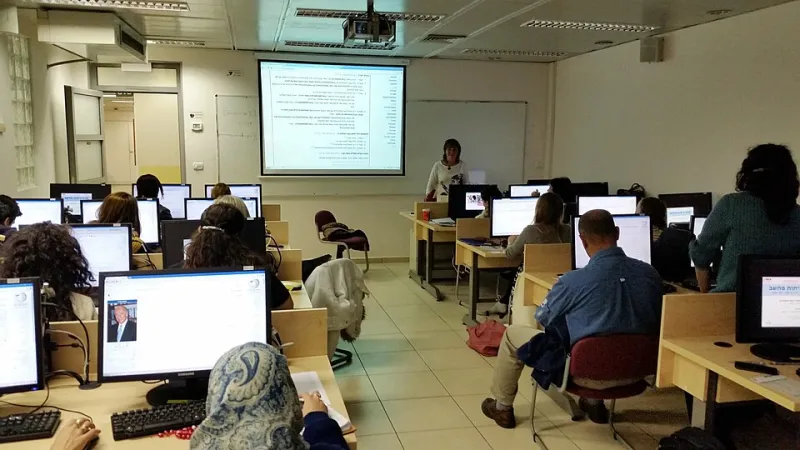
The seminar room in Building C is arranged in a circle, which is the first clue that something unusual is happening. The second clue is the observer in the corner with a clipboard, timing how long a silence lasts before the professor fills it.
For the past eighteen months, the University of Atsugi has quietly run what may be the most contested teaching credential in American higher education: the Socratic Certification Program, a two-semester process in which faculty are assessed not on lecture quality, course organization, or end-of-term evaluations, but on a single skill—the ability to respond to student pushback, in real time, without retreating into authority.
The program's premise is simple and, depending on whom you ask, either long overdue or quietly radical. If the goal of a university education is to produce people who can reason under pressure, then the classroom moment that matters most may not be the well-rehearsed explanation. It may be the moment a student says, 'I don't think that's right,' and everyone waits to see what happens next.
A Metric Built on Discomfort
Certification candidates are observed four times per semester in their regular courses. Observers—trained faculty from other departments and, in later stages, students themselves—score responses to challenge along three dimensions: intellectual engagement, emotional regulation, and what the program calls 'returning the question,' the practice of turning a challenge into an inquiry the whole class can pursue.
A professor who deflects with 'we'll cover that later' loses points. A professor who says 'that's a real problem with this model—let's follow it' gains them. Crucially, being wrong is not penalized. Candidates who concede an error and use it productively often score higher than those who defend a correct answer defensively.
Dr. Marisol Reyes, who directs the program, is blunt about what the credential is designed to measure. 'Anyone can prepare a good lecture,' she says. 'You can rehearse it in your office for a week. What you cannot rehearse is the twenty-year-old in the third row who has found the flaw in your argument and is brave enough to say so out loud. What you do in that moment teaches more than the lecture ever will.'
Three Professors, Three Outcomes
The program's first cohort included three faculty members whose trajectories illustrate the range of responses the credential provokes.
Professor Daniel Okafor, a thermodynamics lecturer with nineteen years of experience, entered the process as its most vocal skeptic. In his initial interview, he called it 'therapy for tenure'—a phrase that has since followed him, half-affectionately, around campus. His early observation scores were low. Observers noted that when challenged, he tended to restate his original point more slowly, as though volume and pace were the problem.
By his third semester, something shifted. Okafor began ending each lecture with a standing invitation: 'Find the weakest claim I made today.' His scores rose sharply—not, he insists, because the program changed him, but because it gave him a structure he could respect. 'I still think the terminology is precious,' he says. 'But I will admit my students argue with me more now, and my courses are better for it. Whether that's the certificate or just me getting old, I can't say.'
Dr. Priya Natarajan, a young statistician, came in with the opposite problem: she conceded too easily. Observers flagged a pattern in which she abandoned defensible positions at the first sign of resistance, leaving students uncertain what was actually true. Her certification work focused on distinguishing genuine refutation from mere insistence—a distinction, she says, that graduate school never taught her. She passed in her second semester and now mentors incoming candidates.
The third profile is the hardest case: a tenured literature professor who requested anonymity after withdrawing from the program twice. He describes the observers as 'an audience I couldn't perform for,' and argues the credential rewards a particular temperament—quick, verbal, comfortable in the spotlight—that has nothing to do with teaching writing to struggling first-years. He remains uncertified and unrepentant, and the program has kept his feedback in its internal reports.
What Students Actually Notice
The most contested element of the program is student participation in scoring. Beginning in the second semester, trained undergraduate observers sit in on candidate classes—compensated, trained in observation protocols, and instructed to score the response, not the person.
Their notes complicate easy narratives. Students, it turns out, are often harsher than faculty observers. They notice hedging. They notice when a professor redirects a hard question to a stronger student. 'You can tell in about four seconds if the professor is actually curious or just managing you,' one student observer wrote in a debrief session. 'Four seconds.'
The National Context
The program arrives amid a broader American reckoning with student evaluations, which research has repeatedly shown to be vulnerable to bias and, at many institutions, to reward leniency over rigor. Several state systems have begun moving away from raw evaluation scores in personnel decisions. Atsugi's approach—replacing a satisfaction metric with a skill-based observation—offers one alternative, though Reyes is careful about overclaiming.
'We are not saying this is the answer to teaching evaluation,' she says. 'We are saying that if a university claims to value critical thinking, it should have at least one credential that measures whether its faculty can withstand it.'
The second cohort begins this fall with a waiting list, which surprises no one more than Okafor. 'I signed up to prove it was nonsense,' he says. 'Now I sit on the review board. Make of that what you will.'