Serendipity by Algorithm: How Atsugi's Library Learned to Anticipate Its Researchers
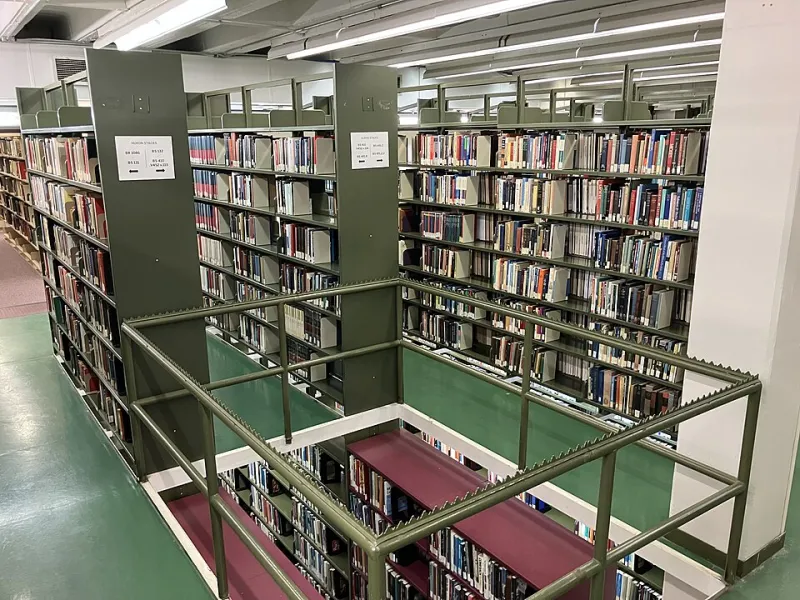
Photo: Gogerr, CC BY 4.0, via Wikimedia Commons
For most of the twentieth century, the great discoveries of library research shared a common origin story: the accidental find. A student walks into the stacks looking for one book and leaves with three others, pulled from the shelf by a hunch, a nearby spine, a title too strange to ignore. At the University of Atsugi, that ritual is now the subject of a quiet experiment — one that asks whether the serendipity of research can be engineered without being diminished.
A Recommendation Engine in the Stacks
Launched last fall as a collaboration between the University Library and the Department of Computer Science, the pilot program — known internally as Curated Discovery — embeds a machine learning layer into the library's catalog and study-space systems. Rather than waiting for a student to search, the system analyzes checkout histories, reading-room dwell times, course syllabi, and (with consent) anonymized citation networks to surface materials a researcher has not yet thought to request.
The results appear not as push notifications, but as what librarians call "shelf whispers": annotated entries in a personalized reading portal, and in a few cases, physical pull-carts placed near a student's usual study area, stocked with three to five items flagged as tangentially relevant.
"The goal was never to replace browsing," says Dr. Naomi Serizawa, the project's lead investigator. "It was to extend it. A graduate student in materials science has maybe forty minutes a week to wander the stacks. If an algorithm can compress that wandering, the student gets more time to actually think."
From Librarian to Research Curator
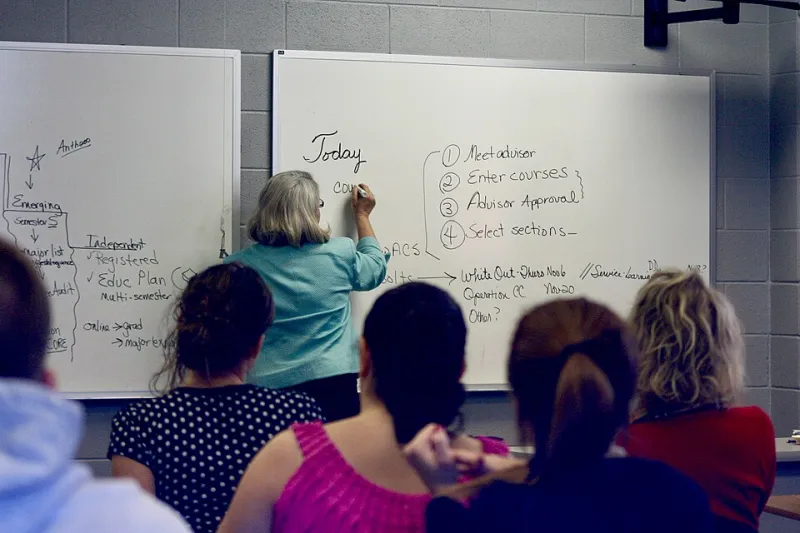
The most visible change has been to the library staff itself. Six reference librarians have been redesignated as "research curators," a title that reflects a shifted — not diminished — role. Where the old model centered on answering questions at a desk, the new model centers on auditing the algorithm.
Each week, curators review a sample of the system's recommendations, flagging items that are obviously irrelevant, uncomfortably prescient, or, occasionally, wrong in instructive ways. One recurring issue: the model initially over-recommended review articles, mistaking their dense citation networks for student interest. Curators retrained the weighting to favor primary sources.
"The machine is very good at finding the adjacent," says senior curator Daniel Okafor. "It is not yet good at finding the contrarian — the paper that argues against everything the student already believes. That's a human judgment, and honestly, it's the most valuable one."
Does Algorithmic Discovery Change Discovery?
The philosophical question underneath the pilot is one that American universities are only beginning to confront. Sociologists of science have long argued that breakthroughs often come from structural holes — gaps between fields that a well-trained intuition occasionally bridges. If an algorithm fills those gaps deliberately, does it produce the same kind of insight, or a tamer version of it?
Early data is suggestive rather than conclusive. Among the roughly 1,400 students enrolled in the pilot, interdisciplinary borrowing rose 23 percent year over year, and the library logged a notable uptick in checkouts of pre-1990 monographs — material the recommendation engine surfaced from digitized archives that most undergraduates never touch.
But some faculty remain skeptical. "There is a difference between being surprised and being served," says one philosophy professor who asked not to be named, noting that she now assigns students a mandatory "unplugged browse hour" each semester.
The library's own assessment is refreshingly modest. In its first-year report, the Curated Discovery team concluded that the system works best not as an oracle but as a nudge — a way of recreating, at scale, the accidental adjacency of the physical shelf.
The Stack That Watches Back
For now, the program remains opt-in, and participation data is governed by the university's research ethics board, with students able to inspect and delete their profiles. That transparency, curators argue, is what separates Atsugi's model from the commercial recommendation engines students already navigate daily.
The deeper ambition is pedagogical. University officials hope the pilot will teach students something about the structure of knowledge itself: that fields connect, that obscurity is relative, and that the next great idea may already be sitting three shelves away, waiting for either a lucky wander or a well-trained model to find it.
Whether the library of the future whispers or simply waits, one thing at Atsugi is certain — it is no longer silent.