Second Shift to the Stars: The 11 P.M. Class That Brought a Dormant Observatory Back to Life
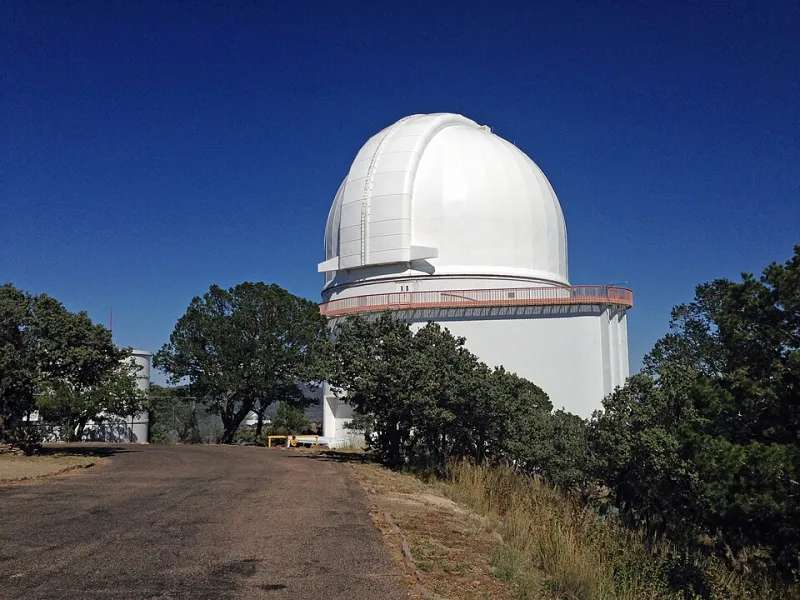
Photo: Fredlyfish4, CC BY-SA 3.0, via Wikimedia Commons
The dome above the Kanari Ridge field had not rotated on its bearings in nearly four years when the Department of Physics and Astronomy began asking, somewhat sheepishly, whether anyone still had a key.
The instrument inside — a 24-inch reflecting telescope, purchased in the 1990s with a grant that faculty of that era described as "once in a career" — had become, in the honest language of the department's own self-study, "infrastructure without a constituency." Introductory astronomy met at 1:30 p.m. on Tuesdays. The sun, notoriously, was not visible at 1:30 p.m. on Tuesdays.
What happened next has become one of the more instructive scheduling experiments in recent memory at the University of Atsugi, and one with uncomfortable relevance for American universities watching students walk away from STEM majors.
The Course That Met When Students Were Actually Awake
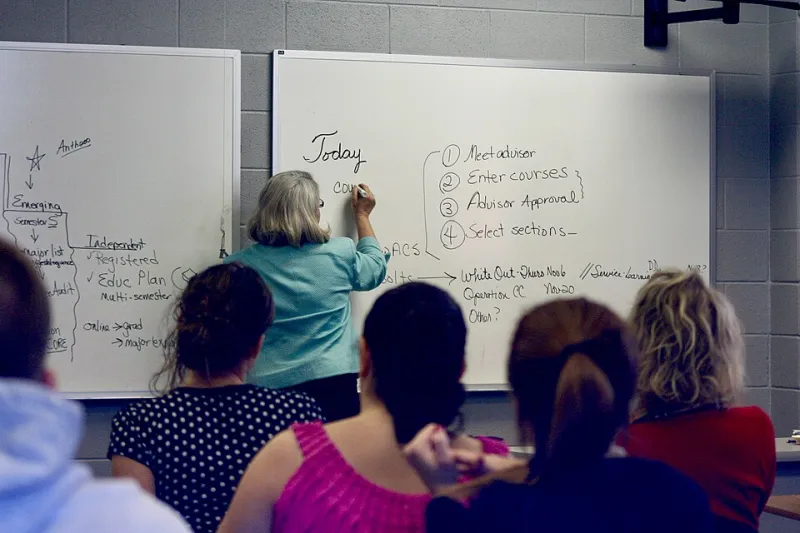
The solution, proposed by Dr. Mirei Tachibana and adopted over the objections of the registrar's office, was to schedule a section of observational astronomy at 11 p.m. — a slot that appears nowhere in standard course timetables and, initially, nowhere in the software that assigns classrooms.
The logic was disarmingly simple. The students most likely to benefit from the course were also the students least served by its timing: commuters with daytime jobs, students caring for family members, and a large population of undergraduates who described themselves, in survey language the department has since quoted liberally, as "not morning people" or "not science people."
Tachibana's framing was more pointed. "We had spent a decade concluding that students lacked the commitment for observational science," she said. "We never asked whether our schedule was measuring commitment or measuring convenience."
Who Showed Up
The enrollment list for the first night-shift section did not resemble the roster of a traditional astronomy course. Of the nineteen students who registered, eleven had never taken a laboratory science at the university level. Three were nursing students fulfilling a requirement. One was a part-time student in her forties who worked a warehouse shift that ended at 9 p.m.
What the group shared was not prior interest in astronomy but availability at 11 p.m. — and, gradually, something that looked a great deal like interest. The course's structure helped. Rather than lectures followed by occasional observation sessions, nearly every meeting took place at the eyepiece, with cloud cover treated as a lesson in experimental design rather than a canceled class.
By mid-semester, students were logging variable star measurements into a database shared with a regional amateur astronomy association — the kind of contribution, Tachibana notes, that historically required either graduate standing or unusual persistence.
A Different Way to Think About Attrition
American higher education has grown familiar with the attrition problem. Roughly a third of students who begin in a STEM field in the United States switch out of it, with scheduling conflicts, work obligations, and rigid lab requirements among the most commonly cited reasons. The standard institutional response has been remediation: study skills workshops, supplemental instruction, advising interventions aimed at changing the student.
The Atsugi experiment inverts that premise. Rather than asking students to rearrange their lives around the curriculum, the curriculum rearranged itself around the students — and the population that appeared was not the population anyone had predicted.
The comparison to US institutions is instructive. Community colleges have long understood that evening and weekend sections expand access; what is rarer is applying that logic to laboratory science, where equipment, staffing, and safety protocols are assumed to constrain scheduling. An observatory, it turns out, is one of the few scientific facilities for which the middle of the night is not an obstacle but the entire point.
The Skeptics' Case
Not everyone on campus is convinced. Faculty in other departments have raised concerns about labor — night instruction is a real cost, and adjunct-heavy scheduling at unusual hours can become a mechanism for shifting burden onto the least-protected instructors. There are also questions about scale: a telescope seats a handful of students at a time, and no one is proposing that organic chemistry meet at midnight.
Tachibana acknowledges the limits. "This is not a template for every course," she said. "It is a template for asking, honestly, which of our requirements are pedagogical and which are just inherited from a schedule nobody chose."
What the Dome Sees Now
The observatory's public log, once updated sporadically, now records observations most clear nights. A second night-shift section has been added. And the department's annual report contains a sentence that would have been unthinkable four years ago: the observational astronomy course now draws more first-generation science students, per capita, than any other laboratory offering at the university.
Whether that translates into majors, and majors into careers, remains an open question — the first cohort is only now moving into upper-division work. But the more immediate finding is already hard to dismiss. The students were not missing. The class was simply meeting at a time when they could not come.
For American universities weighing how to keep students in science, the lesson from the ridge above Atsugi may be less about telescopes than about timetables: sometimes the retention problem is not a student problem at all. It is a clock problem. And clocks, unlike commitment, can be adjusted.