Reading the Refusals: Inside Atsugi's Annual Audit of Every Applicant It Turned Away
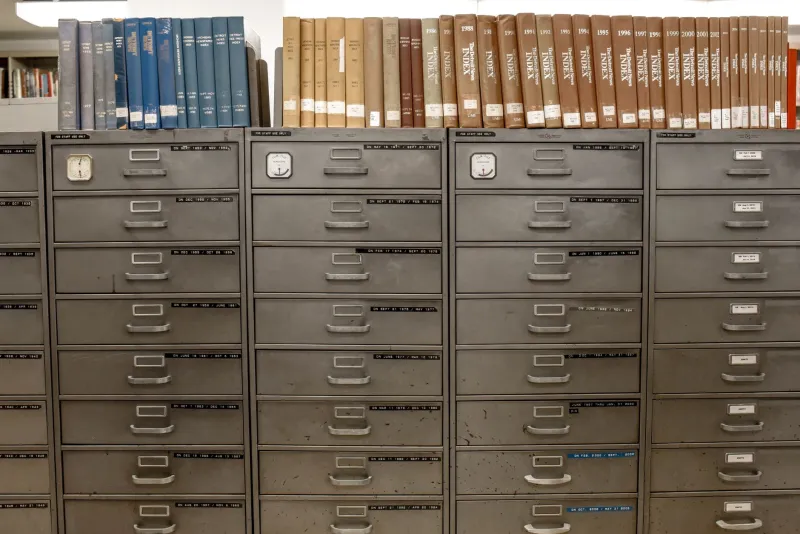
Every April, after the admission decisions for the coming fall have been sent and the enrollment deposit deadlines have passed, a small office on the second floor of the University of Atsugi's administration building begins what its staff call the harvest. Files that most institutions would seal and forget — the applications of roughly 4,000 students who were not offered admission in a given cycle — are pulled back out, de-identified, and fed into a statistical review that has become one of the more unusual traditions in Japanese higher education.
The exercise, formally titled the Admissions Outcome Audit, began a decade ago as a modest quality-control measure. It has since evolved into something closer to institutional soul-searching: a systematic attempt to ask whether the university said no to the right people.
A Rejection Is Not the End of the Record
The premise is deceptively simple. When Atsugi declines an applicant, the decision is treated not as a verdict but as a hypothesis — the university's best guess, at that moment, that the student and the institution are a poor match. The audit tests that guess.
Analysts track what happens to rejected applicants afterward. Where do they enroll? Do they graduate? Do they end up in fields adjacent to the ones they hoped to pursue at Atsugi? Occasionally, they reapply — and the audit pays particular attention to the students who do, comparing their second applications, and their eventual outcomes, against the reasons for their first refusal.
The sample is large enough to be meaningful. In the most recent cycle, the audit covered 4,012 rejected applicants, roughly three times the size of the admitted class. That asymmetry, auditors note, is precisely the point: the university's future reputation is shaped as much by the students it turns away as by the ones it admits.
What the Numbers Showed
The findings have not always flattered the institution.
An early audit, conducted five years into the program, surfaced a pattern that admissions officers initially resisted discussing publicly. Applicants transferring from two-year community colleges — the Japanese equivalent of regional technical and junior colleges, though the dynamic maps closely onto the American community college transfer pathway — were being rejected at rates that their subsequent academic records did not justify. Among transfer applicants who later reapplied and were admitted, eventual graduation rates and research participation were statistically indistinguishable from those of direct-entry students.
In other words, the university had been screening out a group that, once given the chance, performed exactly as well as everyone else.
A second pattern concerned applicants from rural prefectures with limited access to advanced laboratory coursework. The admissions rubric, heavily weighted toward documented research experience, effectively penalized students for the resources of their high schools rather than their own aptitude. The audit could not prove intent, but it could prove correlation — and correlation, repeated across three consecutive cycles, was enough to force a change.
Rebuilding the Rubric
What followed was a two-year redesign of the evaluation framework. The revised rubric introduced what admissions officers call a context adjustment: quantitative indicators of the opportunities available to each applicant, drawn from school-level data, that are used to interpret rather than discount achievements. A student who built a functioning water-quality sensor with salvaged components in a school without a science lab is now legible to the rubric in a way she previously was not.
The university also established a small appeals channel — not a second chance at admission, administrators are careful to say, but a structured process by which applicants can flag material they believe was misread. Fewer than two percent of rejected applicants use it. Of those, roughly one in five decisions is revised.
Perhaps the most consequential reform is cultural rather than procedural. Admissions reviewers at Atsugi now undergo an annual calibration session in which they evaluate anonymized files from previous cycles alongside the audit's outcome data. Reviewers see, in effect, how their past judgments held up against reality. Several have described the experience as humbling.
What American Admissions Offices Might Take From It
The audit model raises an obvious question for US institutions, where holistic admissions is a national orthodoxy and rejection is a black box. American colleges publish admit rates and yield figures, but almost none systematically follow the trajectories of the students they decline. The rejected applicant, in the American system, simply disappears from the institutional record.
There are practical obstacles, of course. Privacy law constrains how much a US institution can learn about students who never enrolled, and following thousands of non-enrollees would require data-sharing agreements that most admissions offices have neither the mandate nor the budget to negotiate. The Atsugi model also benefits from a centralized, file-based admissions culture that differs meaningfully from the decentralized, reader-driven system common at American universities.
But the underlying discipline — treating rejection as a measurable institutional act, subject to error and therefore to audit — translates across borders. A selective university that admits 15 percent of applicants makes 85 percent of its decisions in the dark. The audit does not eliminate that darkness. It simply insists on turning on a light, one cycle at a time.
Atsugi's auditors are the first to caution against overreading their results. Correlation is not destiny, sample sizes fluctuate, and no statistical review can capture the full complexity of an eighteen-year-old's potential. What the audit offers is not certainty but accountability — a way for an institution to ask, annually and in good faith, whether its noes are as thoughtful as its yeses.
The next harvest begins in April. Somewhere in those 4,000 files, the auditors know, are students who deserved a different answer. The question the university has learned to sit with is not whether it will find them again, but whether, this time, it will be looking.