From Grievance to Gateway: The Bioethics Class Atsugi Built Out of a Complaint

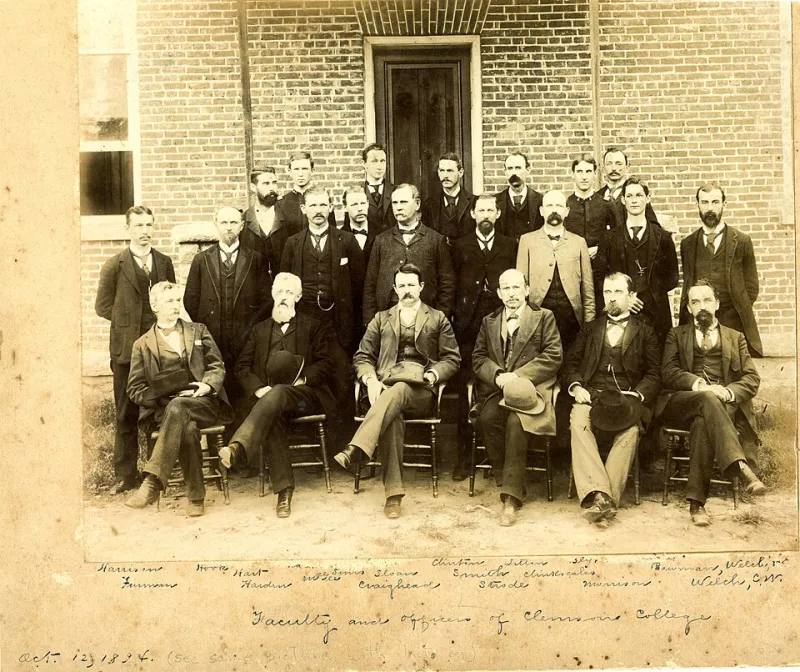
Photo: Harrison Keely, CC BY 4.0, via Wikimedia Commons
A Complaint Filed in the Ordinary Way
The appeal arrived in the fall semester through the standard channels: a two-page form, a signature, a photocopy of the contested assignment. Maya Lindqvist, then a third-year molecular biology major, alleged that her grade in a junior seminar on genetic engineering reflected, in her words, "a disagreement about whether students were allowed to have ethical objections to the protocol itself."
What happened next was anything but standard.
Under the University of Atsugi's shared governance charter, grade appeals route first to the department chair, then to a faculty review panel. Most resolve quietly. Lindqvist's did not — because the panel, after reviewing her 40-page appendix of cited literature on informed consent and dual-use research, concluded that she was right about the larger issue. The course had never formally taught the ethics frameworks it implicitly demanded students apply.
When the Panel Reads the Appendix
"I expected to defend my grade," Lindqvist recalls. "I didn't expect three professors to spend forty minutes discussing my citations."
The panel's report, later shared (with redactions) with the Faculty Senate, contained an unusual recommendation: rather than simply adjusting the grade, the department should address the instructional gap the appeal had surfaced. The seminar's instructor, Professor Daniel Okafor, agreed — with a condition that surprised everyone in the room.
"I asked if she would help build the fix," Okafor says. "If a student can document a curricular failure that thoroughly, she can document the curriculum that replaces it."
Co-Design, Not Consultation
The resulting course, BIO 314: Ethics of Intervention, launched the following spring as a permanent elective in the bioethics sequence. Its design process was deliberately asymmetric in an unfamiliar way: Lindqvist held equal voting rights on readings, assessment structure, and case selection. Faculty retained authority over credit standards and accreditation compliance, but the syllabus itself bears her fingerprints — most visibly in its opening unit, built entirely around contested historical cases in American research ethics, from Tuskegee to the HeLa cell controversy.
Dean of Academic Affairs Priya Ramanathan signed the authorization. "The instinct in higher education is to treat appeals as noise to be managed," she says. "Atsugi's position is different. An appeal is data. Sometimes it's the most honest curricular assessment a department will ever receive."
The Precedent Question
Not everyone on campus embraced the arrangement. Critics within the Faculty Senate raised concerns about role confusion — whether a student who had recently been an adversarial party in a formal process could appropriately shape policy. Okafor acknowledges the tension but frames it as the point.
"Shared governance in the United States has historically meant faculty governance, with students consulted at the margins," he says. "This was a small experiment in widening that circle, and we documented every step so others could judge it."
The documentation exists in an unusual form: the course's own archive. BIO 314 maintains a public record of its design decisions, including the original appeal summary, panel findings, and meeting minutes from the co-design sessions — a transparency measure Ramanathan describes as "accountability built into the artifact."
What Students Took From It
Enrollment in the first offering exceeded projections by nearly forty percent, drawing students from biology, philosophy, and public health. Lindqvist, now a fourth-year and a teaching assistant for the course, is careful about the legacy.
"The grade was almost beside the point by the end," she says. "What mattered was that the university treated my argument as something worth building on rather than something to make go away."
For a generation of American students increasingly vocal about having a seat at institutional tables — on curriculum committees, on hiring panels, in accreditation reviews — the Atsugi experiment offers a concrete template. Dissent, handled well, doesn't have to end with a ruling. Sometimes it ends with a syllabus.
And on this campus, it may end with a course listing that outlives everyone who argued about it.