Where the Trees Are the Textbook: Inside Atsugi's Outdoor Biology Mandate
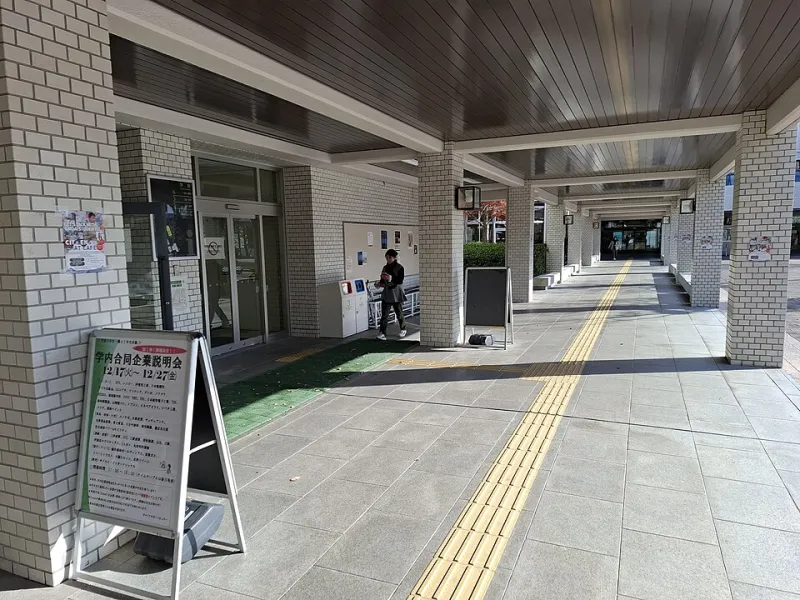
Photo: Millethills, CC0, via Wikimedia Commons
The lecture hall in the Science Building still fills at 9 a.m. on Tuesdays. But since last fall, every introductory biology student at the University of Atsugi has been required to leave it — at least once a week, and often twice.
The change is the result of a quiet administrative decision that elevated the campus's 200-acre arboretum from a landscaped amenity to an officially designated teaching facility. Under the new policy, no introductory biology section may exist without a paired field session, and faculty scheduling treats the arboretum like any other laboratory space, with reserved hours and attendance requirements.
An Inventory That Became a Curriculum
The mandate traces back to a spreadsheet, not a committee report. Dr. Miriam Okafor, a plant physiologist who joined Atsugi in 2016, and Dr. Thomas Reyes, an ecologist and longtime colleague, began mapping campus tree species in 2021 as a side project — a way, Okafor says, "to know what we actually had." Using handheld GPS units and a borrowed dendrometer, the pair documented more than 1,400 individual trees across 190 species over three years.
Somewhere around species number 80, the project changed character. "We realized we weren't building an inventory," Reyes recalls. "We were building a syllabus that happened to be planted in the ground."
The logic was hard to argue with. Introductory biology courses traditionally rely on preserved specimens, slides, and textbook diagrams to teach concepts like xylem transport, phenology, and interspecies competition. Atsugi's campus, it turned out, contained living examples of nearly every concept in the first-year sequence — including a stand of hybrid poplars that demonstrates clonal reproduction, and a single ginkgo near the library whose seasonal senescence has become a recurring case study in the course's autumn unit.
From Pilot to Policy
The outdoor component began as an optional supplement in two sections in fall 2023. Within a year, departmental assessment data showed a measurable gap: students in field-paired sections scored, on average, 9 percentage points higher on concept-application exam questions, the type that ask students to reason through unfamiliar scenarios rather than recall definitions.
Retention figures told a similar story. Students in the pilot sections were 22 percent less likely to withdraw or fail the course — a difference the department attributes, in part, to the field sessions functioning as informal study communities. "You can't hide in the back row of a forest," Okafor notes.
Skeptics raised familiar concerns: weather disruptions, accessibility for students with mobility limitations, and the logistics of outdoor assessment. The department's answers have been pragmatic. Every field session has an indoor equivalent for students who request one; severe-weather days convert to specimen-based labs using materials collected from the arboretum's routine maintenance pruning; and the arboretum's paved loop path keeps the core teaching sites reachable for all students.
What the Data Shows — and What It Doesn't
The University's Office of Institutional Research has been careful about causal claims. Its 2025 report on the program found consistent performance gains in field-paired sections, but noted that the students who enrolled in them during the pilot years were self-selected, and that instructor enthusiasm may be a confounding variable. A randomized section assignment, now in its second semester, is expected to settle the question more definitively.
Even so, the findings have traveled. Two other departments — environmental science and introductory geology — have submitted proposals to designate their own campus zones as teaching facilities. The provost's office, meanwhile, has begun referring to the arboretum in strategic planning documents as "the university's oldest laboratory," a phrase that Okafor finds slightly embarrassing but does not dispute.
A Different Kind of Classroom Culture
What surprises both faculty most is not the exam data but the shift in how students relate to the material. Field notebooks — required in all sections — have become objects of unexpected attachment; several students have continued their species observations after the course ended, submitting entries to the arboretum's public phenology database.
"In a lecture hall, biology is something that happened to other organisms, somewhere else, at some other time," Reyes says. "Out here, it's happening on the tree you walk past every day. That's not a teaching gimmick. That's just what the discipline actually is."
The university has since committed funding to mark all 190 species with botanical signage, including QR codes linking to student-authored species profiles. The first cohort of those profiles, written as course assignments last spring, is now part of the arboretum's permanent visitor materials — meaning that Atsugi students are, in a literal sense, co-authoring their own curriculum, one tree at a time.