Eighteen and on the Hiring Committee: Inside Atsugi's Student-Powered Faculty Search
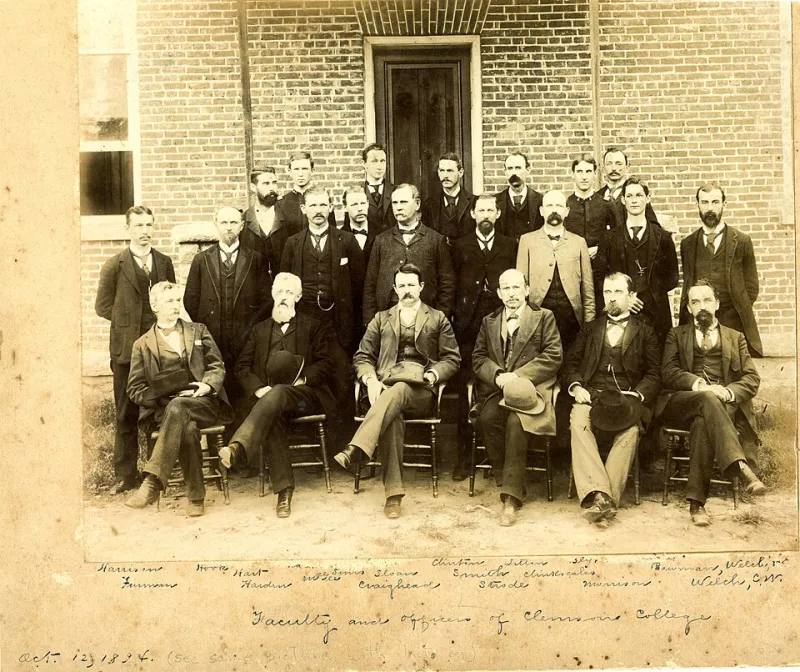
Photo: Unknown authorUnknown author, Public domain, via Wikimedia Commons
When the Department of Environmental Science at the University of Atsugi opened its latest faculty search last fall, the committee roster included the usual appointments: a chaired professor, two associate professors, a representative from the graduate school. And then there was Yui Nakamura, a second-year undergraduate who, at nineteen, held the same voting weight as everyone else in the room.
Atsugi is one of a small number of universities that seats undergraduates on faculty search committees as a matter of policy rather than exception. Under the university's Shared Governance Charter, adopted in 2019, every department conducting a tenure-track search must include at least one voting student member selected by peer election. The practice has drawn attention from higher education researchers in the United States, where student participation in faculty hiring remains rare and, when it exists, typically advisory.
A Full Cycle, From Shortlist to Vote
The search Nakamura joined was for an assistant professorship in climate systems — a position that drew 143 applications. Her orientation began with a three-hour training session run by the Office of Academic Personnel covering confidentiality law, conflict-of-interest disclosure, and the university's rubric for evaluating research statements.
"The first thing they told us is that we are not there to represent 'the student voice' as some abstraction," Nakamura said. "We're there as committee members who happen to know what it's like to take a 9 a.m. lecture from someone who has never taught one."
During the paper screening stage, Nakamura reviewed all 143 files alongside her colleagues, scoring each against the published rubric. She estimates she spent forty hours on the process across the semester — unpaid, as faculty members are, but with course-load accommodations arranged through her dean's office.
The committee narrowed the pool to eleven candidates for remote interviews, then brought four to campus for full-day visits. Each visit followed Atsugi's standard format: a research seminar, a teaching demonstration open to all undergraduates, and a series of one-on-one meetings — one of which was always scheduled with the student committee member.
When the Candidate Is Interviewed by a Sophomore
Candidates' reactions to the arrangement vary, according to interviews with three members of the committee and two finalists who agreed to speak on background.
"The research seminar is the easy part," said Dr. Marcus Bell, an American academic who went through a similar process at a US institution with non-voting student observers. "But sitting across from an eighteen-year-old who asks pointed questions about your teaching philosophy — that's a different kind of pressure. And honestly, a useful one."
One finalist withdrew before the campus visit stage, citing discomfort with the format. The department logs such withdrawals, and its five-year review found they occur at roughly the same rate as searches without student members. More common, according to committee chair Professor Hiroko Sanada, is initial surprise followed by engagement.
"Candidates adapt quickly," Sanada said. "The ones who struggle are the ones who cannot explain their research to someone outside their subfield. That is a finding, not a flaw."
What Students Actually Vote On
Critics of the model sometimes assume student members will favor candidates who assign less homework or grade leniently. The department's records suggest otherwise. In the seven searches conducted under the charter, student votes have aligned with the committee majority in six — and in the one case of divergence, the student argued for the candidate with the stronger teaching record over the one with the more prestigious publication list.
Nakamura's own criteria were practical. "I asked every candidate the same question: tell me about a time a student in your class was failing, and what you did. Some of them had great answers. Some of them had never thought about it. That told me more than the teaching statement."
The final vote for the climate systems position took place over two hours in a conference room on the third floor of the Science Complex. After extended discussion of the top two candidates, the committee voted 5–0 to extend an offer. Nakamura's ballot counted like any other.
A Model Under Scrutiny
The practice is not without detractors. Some faculty at peer institutions argue that search deliberations involve personnel matters — salary expectations, spousal accommodations, internal politics — that students should not witness. Atsugi addresses this through a two-stage process: student members recuse themselves from discussions unrelated to the candidate's academic qualifications, rejoining for the evaluative vote.
Whether the model travels to American campuses remains an open question. Shared governance structures in the US vary widely, and faculty senates guard hiring authority jealously. But Atsugi administrators point to a simple metric: exit surveys of hired faculty show that those who went through a student-inclusive search report higher confidence in their department's teaching culture than those hired before 2019.
As for Nakamura, she has since joined a second search in the physics department. Her advice to the student who succeeds her is characteristically direct: "Read every file. Ask the question the professors are too polite to ask. That's why you're in the room."
The position she helped fill begins next April. The successful candidate's first assignment: a 9 a.m. introductory lecture, scheduled at the request of the students on the committee who knew exactly when their peers could actually learn.