Before the Buses Run: Inside Atsugi's 6 A.M. Seminar Built for the Students Who Commute Farthest
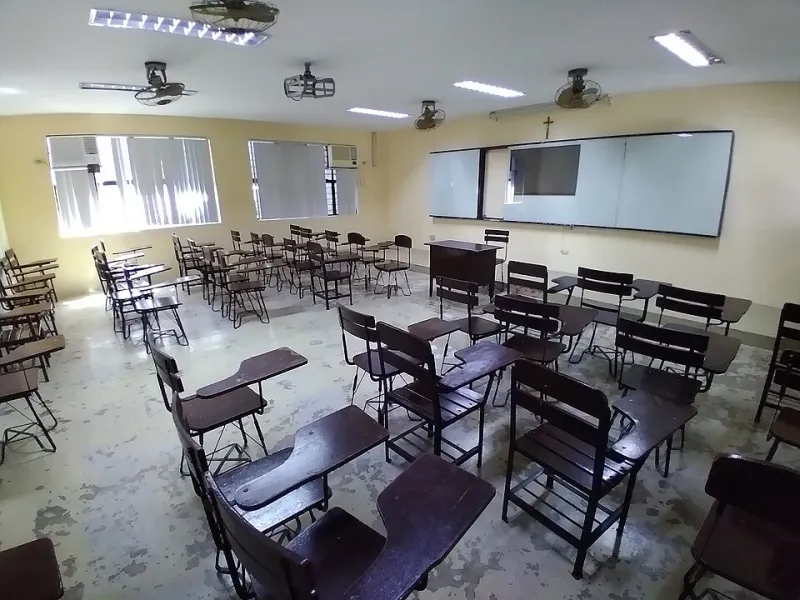
Photo: UndueMarmot, CC0, via Wikimedia Commons
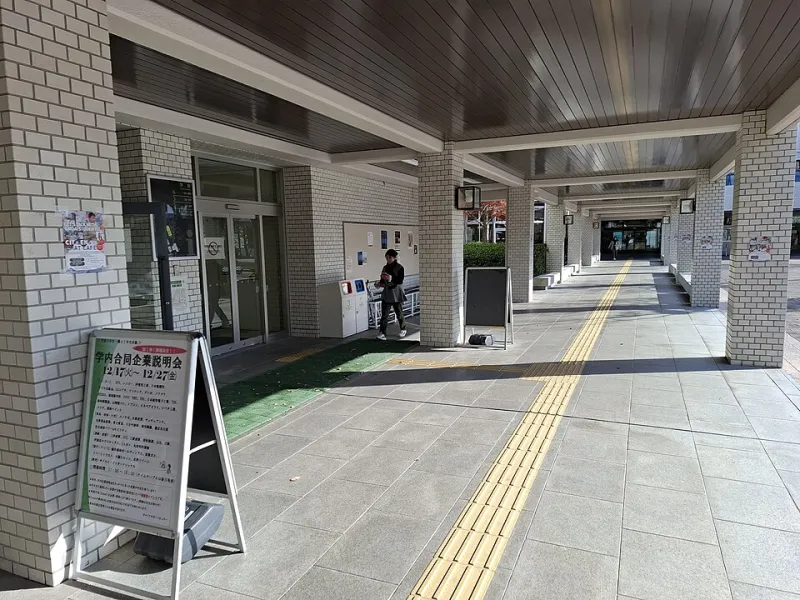
The first seminar of the day at the University of Atsugi begins at 6:00 a.m., forty minutes before the earliest campus shuttle completes its loop. The corridor lights in the science wing are still on their overnight settings when students file in, many carrying breakfast eaten on a train. The course — Introduction to Scientific Reasoning, a general-education requirement — was not placed in this time slot by accident. It was placed there because, according to the university's own transit data, that is when its most distant students are already awake.
Scheduling Around the Dorm Myth
American higher education has long operated on an unspoken assumption: students live near campus. Course schedules cluster between 10 a.m. and 3 p.m., extracurriculars fill the late afternoon, and office hours assume a student can linger. For the growing population of commuter learners — a group that now includes a majority of undergraduates at many US public institutions — that architecture quietly works against them.
Atsugi confronted this directly. In 2023, the university's Office of Academic Planning distributed a travel survey to all enrolled students. The results unsettled the administration: a meaningful cohort of working students was traveling more than ninety minutes each way, often from regions where housing near campus was unaffordable. These students were not skipping morning classes out of apathy. They were skipping classes that started before they could physically arrive.
The university's response was counterintuitive. Rather than pushing all courses later, it created a dedicated early track — a small set of core seminars beginning at 6 a.m., timed so that students arriving for full-day shifts or long commutes could complete a required course before the traditional day even began.
Who Takes a Class in the Dark
The sunrise track, informally called the "first light" section by faculty, serves a specific population. Roughly two-thirds of enrollees work part-time or full-time jobs. Many are transfer students from community colleges, a demographic American readers will recognize from California's and New York's public systems. A significant number are parents who arrange childcare before dawn.
One student profile from the program's internal review illustrates the logic: a laboratory technician at a pharmaceutical firm in a neighboring prefecture who begins her shift at noon. Under the old schedule, she could not enroll in the required reasoning seminar at all without quitting her job. Under the new one, she attends class, studies in the library, and reports to work by early afternoon.
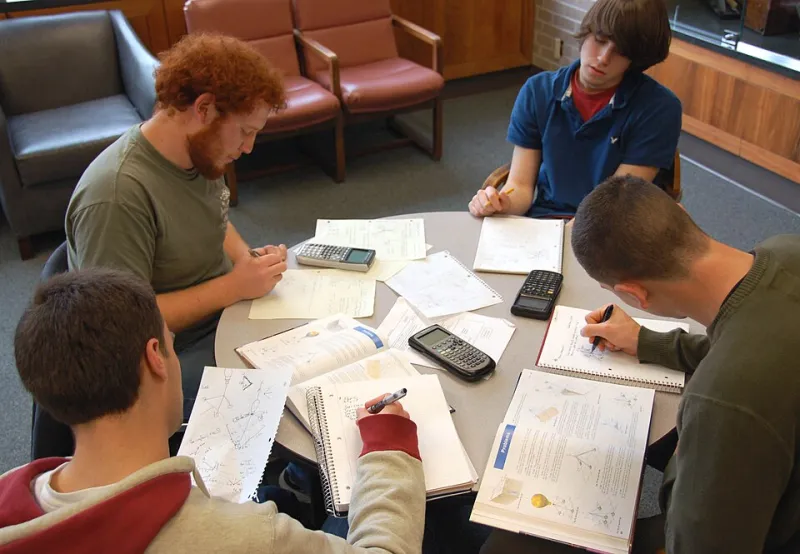
Faculty initially worried that a 6 a.m. science seminar would produce disengaged, half-asleep discussion. The opposite has occurred, according to course instructors. Students who choose the track — enrollment is voluntary, though it is actively marketed to commuters — arrive having already been awake for an hour. Attendance rates for the early sections have run roughly twelve percentage points higher than comparable mid-morning sections of the same course.
What the Data Says
Atsugi has treated the program as a research project from the start, publishing attendance and performance figures each semester. Three findings stand out.
First, persistence. Students in the early track withdrew from the required course at nearly half the rate of the general population, suggesting that schedule fit — not course difficulty — was the primary barrier for commuter learners.
Second, clustering effects. Early-section students formed study groups at unusually high rates, likely because the track created a de facto cohort of students with similar schedules. This mirrors findings from learning-community programs at US institutions such as Georgia State University, where structured cohorts improved retention for first-generation students.
Third, a limitation the university acknowledges openly: the model only works when the course itself is worth the trip. A 6 a.m. lecture delivered as a passive slide show, administrators concede, would collapse. The early track pairs every seminar with a discussion-based format and caps enrollment at eighteen students.
Could It Work in the United States?
For US educators, the Atsugi experiment raises an uncomfortable question: how much of the achievement gap for commuter students is actually a scheduling gap? Community colleges, which educate a heavily commuting population, have already moved aggressively into evening and online formats. The pre-dawn seminar suggests a third option — scheduling that treats a student's transit route as seriously as a professor's teaching preferences.
There are obvious obstacles. American campuses built around parking structures rather than train stations may find that their commuters' constraint is not the clock but the highway. Faculty contracts, too, rarely contemplate 6 a.m. teaching loads, and Atsugi compensates its early-track instructors with course reductions elsewhere.
Still, the underlying principle travels well: institutions should audit their schedules against the actual geography of their students' lives. At Atsugi, that audit began with a survey and ended with a classroom whose lights flicker on before the buses run. The lesson for American higher education is not that every campus needs a dawn seminar. It is that the students hardest to schedule are often the students no one has tried to schedule at all.