Sensors in the Sidewalks: Inside Atsugi's Experiment to Turn Its Own Campus Into a Research Instrument
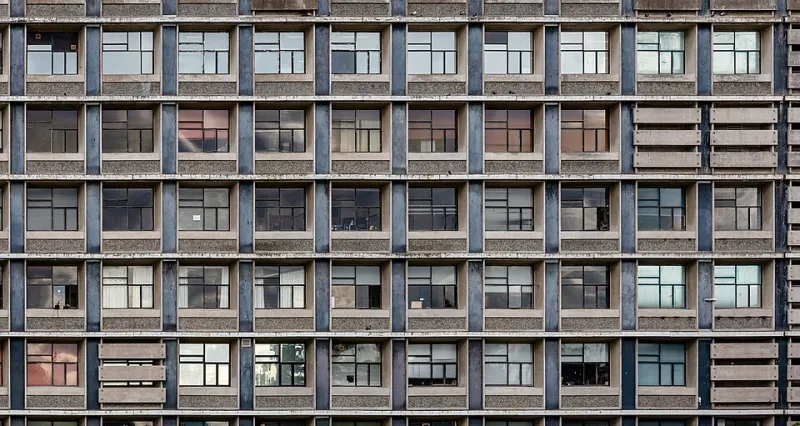
Photo: Michal Klajban, CC BY-SA 4.0, via Wikimedia Commons
Walk across the main quadrangle at the University of Atsugi and you are, whether you realize it or not, participating in an experiment. The paving stones beneath your feet contain piezoelectric footfall counters. The dormitory you pass houses a three-axis accelerometer bolted to its foundation. The classroom building ahead of you streams its own electricity consumption to a public dashboard that any student — or any researcher anywhere — can consult in real time.
For most American universities, campus infrastructure is overhead: something to be maintained, budgeted, and occasionally protested. At Atsugi, it is increasingly treated as apparatus. And the distinction is quietly reshaping what undergraduate research looks like.
A Campus That Measures Itself
The initiative, known informally among faculty as the Living Laboratory Program, began modestly in 2019 with a single seismometer installed beneath one residence hall. The Sagami region's seismic profile made the location scientifically interesting, but the real innovation was administrative rather than technical: the university agreed to let undergraduate courses access the raw data stream from day one.
That decision proved consequential. What started as one instrument has grown into a distributed network of more than 400 sensing points across eleven buildings — accelerometers, smart meters, occupancy sensors, temperature probes, and the aforementioned pedestrian counters embedded in high-traffic walkways.
Dr. Kenji Morita, a structural engineer who helped design the network, puts it plainly: "Most universities study the world and bring samples back to campus. We decided the campus itself would be the sample."
What Undergraduates Actually Do With It
The practical effect is that Atsugi students rarely experience the gap between coursework and genuine data that frustrates so many American science programs. A sophomore in an introductory data science sequence can pull three years of building-level energy consumption, clean it, model it, and — crucially — see her model deployed by facilities staff making real scheduling decisions.
Consider a few recent undergraduate projects:
- Seismic baseline mapping. Students correlated accelerometer readings across dormitories to distinguish building-specific resonance from regional tremor, producing calibration data now cited by a prefectural hazard assessment.
- Occupancy and ventilation. A team of public health students used foot-traffic counters to model how corridor design affects congestion during class changes — findings that prompted a modest but real change to the Monday timetable.
- Behavioral energy studies. Rather than installing new equipment, researchers simply published dormitory electricity use on hallway displays. Consumption dropped measurably within six weeks, a result the students presented at a national conference.
The common thread is not the technology, which is largely off-the-shelf. It is the institutional posture: the university treats its own operations as fair game for study, critique, and publication by its least senior researchers.
The American Context
For US higher education, the model raises an obvious temptation — the "monetization" angle. Campuses sitting on millions of square feet of building stock could, in theory, sell sensor-derived insights to utilities, insurers, or architecture firms. Atsugi has experimented with this in limited form, licensing anonymized occupancy data to a regional transit planner.
But faculty here are cautious about leading with revenue. "The moment the dataset becomes a product, students become a cost center rather than a research community," Morita notes. The Atsugi approach inverts the usual sequence: educational access first, commercial applications only where they don't interfere.
There is also a governance lesson. American campuses weighing similar programs will confront FERPA-adjacent privacy questions immediately, particularly around occupancy and movement data. Atsugi's solution was architectural: counters count, they do not identify. No cameras, no device tracking, no individual-level records. The privacy policy fits on a single poster in the student union, and students helped write it.
A Different Definition of Fieldwork
Perhaps the most durable legacy of the Living Laboratory Program is attitudinal. Atsugi seniors routinely list "campus infrastructure" among their research skills on graduate school applications — a phrase that would have been meaningless a decade ago.
The deeper argument the university is making is about proximity. Field sites, grant logistics, and equipment access remain the great filters of undergraduate research in the United States; the students who do research early are often the ones who happen to know someone with a lab. Atsugi's wager is that if the laboratory is the dormitory, the filter disappears.
American universities do not need Atsugi's seismic profile to adopt the logic. Every campus already generates the raw material — energy flows, movement patterns, structural responses — and most already discard it. The instrument, in other words, is already built. It is simply waiting to be read.