After Midnight, the Building Speaks: What Two Years of Campus Sensor Data Taught Atsugi About Its Nighttime Researchers
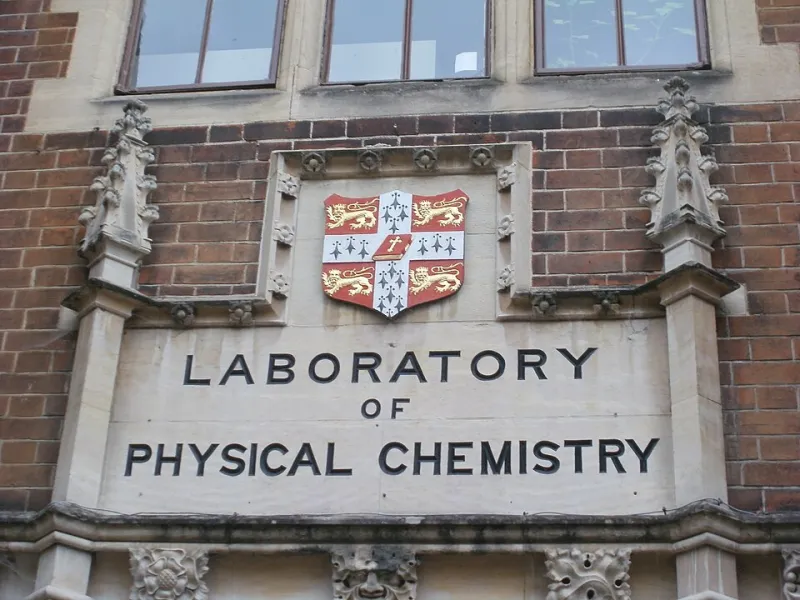
Photo: Anna L Martin, CC BY 2.0, via Wikimedia Commons
Universities tend to learn about their students through surveys, course evaluations, and the occasional town hall. The University of Atsugi recently tried a different instrument: the building itself.
Over two academic years, a team in the Office of Institutional Research aggregated anonymized usage logs from sources most students never think about — badge swipes at the Central Library, reservation records for shared centrifuges and spectrometers, and even cycle counts from the laundry machines in the residence halls. The data contained no names. It contained something arguably more revealing: a timestamped map of when and where the campus actually functions.
The 2 A.M. Signature
The most striking pattern emerged in the shared instrumentation logs. Core lab equipment — the kind too expensive for individual departments to hoard — showed pronounced usage spikes between 11 p.m. and 3 a.m., concentrated almost entirely during weekdays. The library's badge data told a complementary story: entries after midnight rose sharply during midterms and thesis season, and the demographic most likely to still be inside was graduate students in the experimental sciences.
"The machines don't exaggerate," said Dr. Naoko Ishida, who co-led the analysis. "When a student tells you they're running reactions overnight because that's the only time the equipment is free, the logs either confirm it or they don't. In this case, they confirmed it — emphatically."
The laundry machines, included partly as a control, added an unexpected dimension. Late-night cycles in the residence halls tracked closely with late-night lab sessions, suggesting that a population of students was effectively living on a reversed schedule — research while the campus sleeps, errands while the campus sleeps, sleep while the campus works.
Who Gets the Night Shift — and Who Doesn't
For the researchers behind the study, the deeper question was not when students work but which students can afford to work that way.
The data showed a clear asymmetry. Students living on campus could log a 2 a.m. run in the mass spectrometry suite and be back in bed in fifteen minutes. Commuter students, whose last trains to surrounding Kanagawa communities depart well before midnight, showed compressed usage windows clustered between late afternoon and evening — precisely when equipment demand, and therefore waitlists, peak.
First-generation students and those holding significant off-campus work hours showed similar compression. In effect, the university's overnight research culture, however productive, quietly rewarded those with the fewest obligations and the shortest commutes.
"We often frame late-night research as a badge of dedication," Ishida noted. "But the data suggests it's also a form of access. If the only open door is the one you can't reach, the door might as well be closed."
One Department Rewrites Its Clock
The findings did not sit idle. The Department of Applied Chemistry, whose shared instruments accounted for some of the most extreme overnight clustering, piloted a restructured reservation system the following semester. Priority blocks were reserved for commuter and first-generation students during daytime and early-evening hours, while automated maintenance windows were shifted to absorb some of the overnight demand that had previously made late-night slots the only reliable option.
The results were modest but measurable. Average equipment wait times for off-campus students fell by roughly a third, and the proportion of overnight sessions declined for the first time in the logged period — not because students worked less, the department emphasized, but because they could work when it suited their lives.
Graduate student representatives responded with cautious approval. Some worried that restricting overnight access would add friction for genuine night owls; others argued that a system depending on exhaustion was not a system worth defending. The department has scheduled a formal review at the end of the academic year.
What a Laundry Machine Knows
For a university that has increasingly turned its own campus into a research instrument — from sidewalk sensors to dining hall nutrition studies — the project raises questions that extend beyond scheduling. Facility data is a rare kind of evidence: unselfconscious, continuous, and largely free of the biases that shape self-reported surveys. It is also, as the research team is careful to note, a kind of evidence that demands restraint.
All analysis was conducted on aggregated, anonymized records, and the team has published its data-handling protocol alongside the findings. The lesson, Ishida suggests, is not that universities should watch their students more closely, but that they should listen to what they already collect.
"Somewhere on every campus is a machine that knows the truth about how students live," she said. "Most institutions simply never ask it."