Preserved in Amber: The Gallery Where Atsugi Keeps Its Worst Science on Display
Photo: Unknown authorUnknown author, Public domain, via Wikimedia Commons
The specimen label reads like an obituary: Thesis 2011-047. Cause of death: cross-contamination, week six. The student graduated anyway.
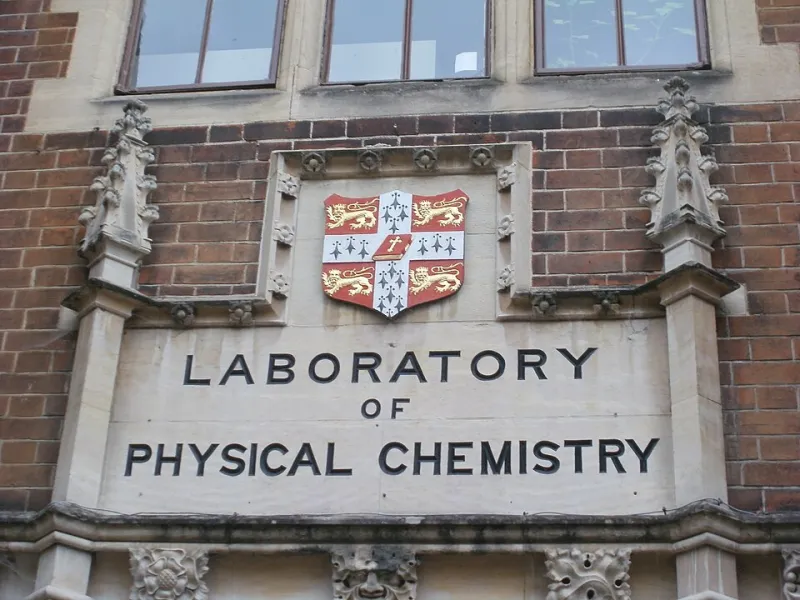
Visitors to the second-floor gallery of Atsugi's Chemistry Building often assume they've wandered into a storage room. The shelves are crowded with beakers furred in mold, chromatography plates streaked with failed separations, and binders of lab notebooks whose marginalia grows increasingly frantic toward the back. It is, in fact, a museum — arguably the most visited square footage in the department.
A Museum Nobody Planned
The collection began informally in 2014, when then-doctoral candidate Hiroko Matsuda refused to discard a reactor vessel from an experiment that had consumed eleven months of her life. She wrote a plaque explaining what went wrong and left it on a windowsill. Other students added their own artifacts. By 2017, the department had given the growing clutter a name, a budget line, and a curator.
Today the Museum of Failed Inquiry — students simply call it "the Failure Gallery" — holds more than 300 catalogued items, each accompanied by a full explanatory placard written by the original researcher. The plaques follow a strict format: the hypothesis, the method, the moment of collapse, and, crucially, what the researcher did next.
"The plaque is never allowed to end at the failure," explains Dr. Ren Takahashi, the department's current curator and a professor of analytical chemistry. "That would be a monument to defeat. We require the after. Did the student redesign the protocol? Switch subfields? Publish the null result? The after is the education."
Reading Failure Like a Primary Source
Faculty have folded the gallery directly into the curriculum. First-year laboratory sections begin each semester with a guided walk through the exhibits, and upper-level courses assign individual plaques for critical analysis — students reconstruct the experiment from the documentation and identify the earliest point where the science went sideways.
The pedagogical payoff, instructors say, is a shift in how students conceptualize scientific progress. Textbooks present results as inevitable; the gallery presents them as survived. One frequently cited exhibit documents a 2016 spectroscopy project in which a mislabeled reagent produced anomalous readings that took the student, Yuki Tanabe, three months to trace. Her plaque ends with a line that has been quoted in campus orientations ever since: "The error was not in my data. It was in my assumption that my data was wrong."
Tanabe's anomalous spectra, it turned out, reflected a previously unreported interaction in the reagent itself — a finding she later published. The original contaminated vial sits at the gallery's entrance under glass.
An Unlikely Recruiting Asset
What department leadership did not anticipate was the gallery's effect on admissions. Prospective students touring the Chemistry Building now routinely detour through the exhibits, and admissions counselors report that it is among the most-mentioned stops in post-visit surveys.
The dynamic is not hard to parse. American high school seniors, particularly those bound for competitive science programs, often arrive with a fear of failure so acute it shapes their course selections. A department that publicly archives its worst days signals something no brochure can: that the institution expects setbacks and has infrastructure for them.
"Parents ask about job placement. Students ask about the moldy beaker," says Takahashi. "The beaker question is the better interview."
The university has leaned into the effect. A rotating exhibit near the gallery entrance features plaques written by alumni, including several now in industry and national laboratory positions, each describing a formative failure. One, from a process chemist at a major pharmaceutical firm, reads in part: "I have never once been asked about my GPA. I have been asked twice, in interviews, how I handled the project in case 2011-047."
The Ethics of Display
The gallery does have critics, and the curatorial team is candid about them. Some faculty initially worried the exhibits could be read as mockery, or that students would feel pressured to donate their failures to demonstrate institutional virtue. The resulting policy is strict: contribution is voluntary, plaques are written solely by the original researchers, and any student may withdraw an item at any time — a right that has been exercised, the curator notes, "rarely, and usually before graduation."
Anonymity is permitted but, curiously, uncommon. Of the current collection, fewer than a dozen plaques are unattributed. Most researchers, Matsuda included, sign their work.
"There is a strange permanence to it," she says, revisiting the reactor vessel that started it all. "When your failure is on a shelf with a plaque, it stops being a wound and becomes a fact. Facts can be taught from."
A Growing Collection
The department is now digitizing the full archive, pairing high-resolution scans of the artifacts with searchable plaque text — a resource that has already drawn inquiries from science educators abroad. There is talk, half-serious, of a traveling exhibit.
Takahashi is measured about the gallery's future. The point, he insists, is not to celebrate failure or even to destigmatize it, though both have happened. The point is accuracy.
"Every exhibit in this room was once the worst day of a young scientist's career," he says. "And every one of them is now a sentence in someone else's education. That is not failure being honored. That is failure being used."
The gallery is open to the public during regular building hours. Admission is free. The mold, visitors should note, is preserved.